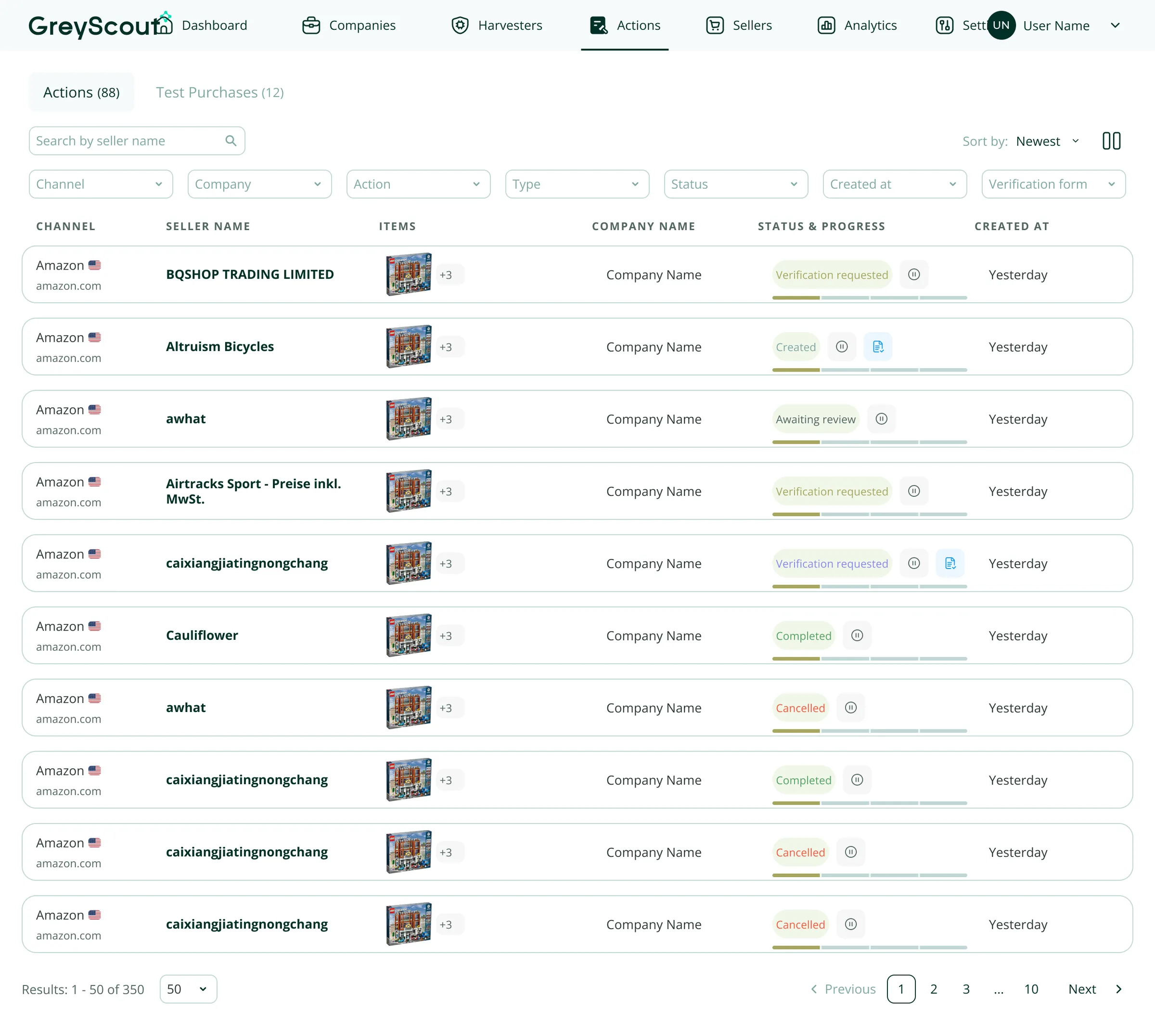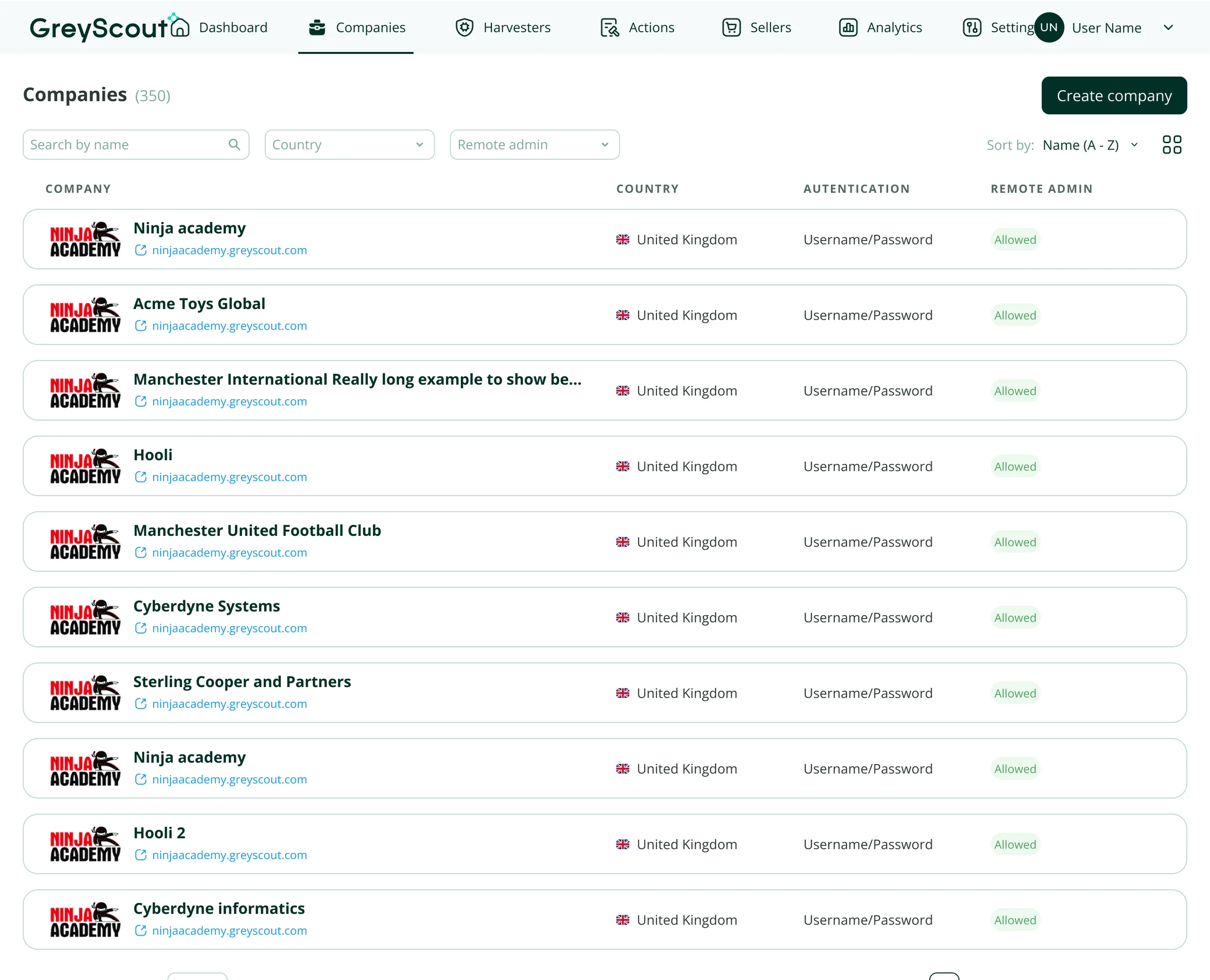
Context & stakes
GreyScout protects global brands like The Body Shop, Bang & Olufsen, Wella and Wilkinson Sword against unauthorized sellers across Amazon, Walmart, eBay and Google Shopping. When I joined, the team was building a new version of the application with one key goal: a user experience strong enough to carry enterprise sales and an upcoming funding round.
The problem
Complex detection-and-enforcement workflows lived in a scattered UI. Onboarding new users, and new team members, was expensive, QA costs were rising, and the sales narrative lacked a coherent product story.
My role & decisions
- First and only designer on the product, building the design practice from zero: flows, UI, system and documentation.
- Owned product design end to end: translated the founders’ vision into flows while pushing back where consistency demanded it.
- Key decision: invest early in a comprehensive design system with documentation instead of shipping screens faster. The trade-off, a slower first sprint, paid back in scale, consistency, accessibility and faster onboarding of new team members.
- Second decision that shaped the product: I dropped an early navigation concept organized around data objects (harvesters, listings, trademarks) in favor of navigation that mirrors how enforcement teams actually work: detect, review, act. Walking the object model through real analyst sessions showed it forced constant context switching, so it went in the bin despite weeks of work on it.
Process
I started with an audit of the existing app and mapped every detection-and-enforcement flow end to end, from a suspicious listing appearing in a harvester to a takedown. That map became the information architecture. From there I iterated the key views (Companies, Harvesters, Actions) in tight loops with the founders and their analysts, then hardened everything into a documented design system: tokens, components, patterns and usage rules the engineers could build from without me in the room.